Your Dog's "Guilty Look" Is Not What You Think
- Dogs don't feel guilt the same way humans do. The guilty look is often a reaction to your behavior
- not evidence they know they broke a rule.
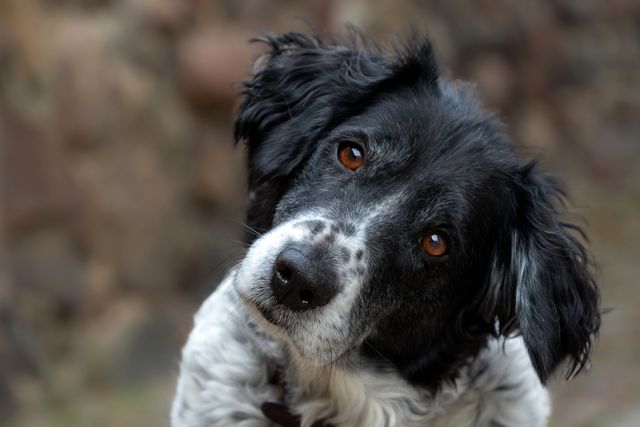
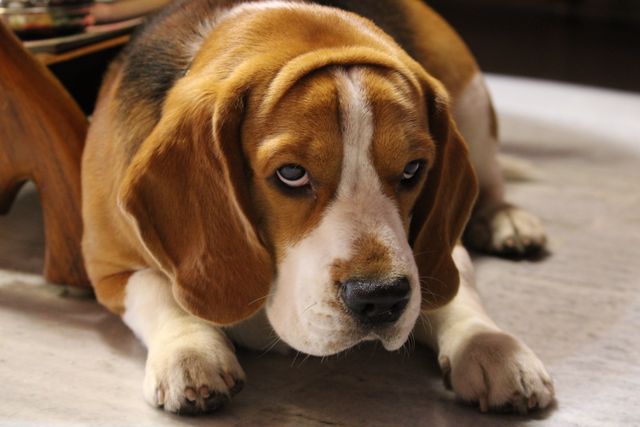
You walk through the front door. The couch cushion is shredded. Your dog is already cowering — ears flat, eyes wide and averted, tail tucked between its legs. "He knows what he did," you think. It's the classic guilty look, and every dog owner has seen it. There's just one problem: your dog almost certainly doesn't feel guilt at all.
The Science of the "Guilty Look"
In 2009, animal cognition researcher Alexandra Horowitz conducted a study that would quietly upend the way millions of people think about their dogs. She asked dog owners to leave the room after either allowing their dog to eat a forbidden treat or not. Owners were told — truthfully or falsely — whether their dog had eaten it. When owners returned and believed their dog had misbehaved, they consistently reported seeing the guilty look, even when the dog had done nothing wrong.
- Dog Care Tips
- Cat Health Guide
- Pet Nutrition
- Training Advice
- Pet Adoption Stories
The smallest moments with a pet often become the memories we treasure most.
The conclusion was striking: the "guilty look" had nothing to do with guilt. It was a response to the owner's behavior — specifically, to scolding or the anticipation of it. Dogs who had done nothing wrong but were accused and scolded showed just as many "guilty" behaviors as dogs who had actually eaten the treat. The look isn't a confession. It's a reaction.
What Dogs Actually Experience
Dogs are emotionally sophisticated animals. Research confirms they experience a rich range of primary emotions — joy, fear, anger, disgust, and affection. But guilt is a secondary, or self-conscious, emotion. It requires the ability to reflect on one's own behavior, compare it against a moral standard, and feel bad about the gap. That's a cognitively complex process that relies on a sense of time, self-awareness, and an abstract understanding of rules.
Dogs live very much in the present moment. If you come home two hours after your dog knocked the trash over, he has no memory of the act in the way that would allow him to feel remorse about it. He does, however, have an exquisitely tuned ability to read human body language. When you walk in and your shoulders stiffen, your brow furrows, and your voice takes on that particular tone, your dog picks up on every cue — and responds with appeasement behaviors designed to de-escalate tension.
Appeasement, Not Apology
Those behaviors we read as guilt — the averted gaze, the flattened ears, the low posture, the slow tail wag — are actually appeasement signals rooted in canine social communication. In wolf packs and among dogs, these submissive gestures serve to defuse conflict with a dominant individual. Your dog isn't saying "I know I did something wrong." Your dog is saying "Please don't be angry with me."
This distinction matters more than it might seem. If you scold your dog after returning home to find a mess, you're not teaching him that chewing the furniture was wrong. You're teaching him that your arrival in a certain mood is frightening. The behavior may even worsen over time, because the dog becomes anxious and confused — not corrected.
Why We See What We Want to See
Humans are natural anthropomorphizers. We assign human emotions and motivations to everything from dogs to cars to clouds. With dogs — animals we have lived alongside for at least 15,000 years — this tendency runs especially deep. Our brains are wired to read faces, and dog faces, over millennia of co-evolution, have developed muscles specifically for producing expressions that resemble human ones. When a dog raises its inner brow and makes big, sad eyes, the resemblance to a contrite child is no coincidence. It works on us, evolutionarily and emotionally.
But projecting guilt onto dogs doesn't just misread them — it can get in the way of actual training and communication. Punishment after the fact is ineffective. For a dog to learn that a behavior is unwanted, the correction needs to happen within seconds of the act. Coming home to make a stern face at your dog, who is simply responding to your energy, accomplishes nothing except making both of you feel worse.
Loving Dogs More Accurately
None of this means dogs are less wonderful or less emotionally present. If anything, understanding what your dog is actually communicating makes the relationship richer. That look isn't guilt — it's trust. It's your dog reaching for the one social tool available to him: submission and appeasement toward the creature he loves and depends on.
The next time you see the "guilty look," try taking a breath before reacting. Clean up the mess, reconsider your dog-proofing strategy, and remember that the eyes staring up at you aren't confessing anything. They're asking, with every signal a dog knows how to give, for things to be okay between the two of you.
Which, when you think about it, is rather more moving than guilt.
Frequently Asked Questions
Why does my dog look guilty after chewing something?
Dogs react to your body language and tone rather than feeling guilt the way humans do. ;
Can dogs feel guilty about bad behavior?
Research suggests dogs show appeasement behaviors instead of true guilt.
Sources
- Veterinary behavior studies
- canine cognition research
- animal behavior experts