The Real Reason Your Pet Stares at You While You Sleep
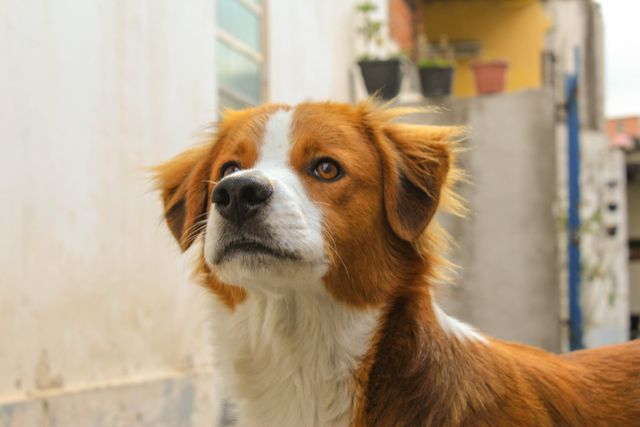
- Staring during sleep is usually normal and reflects attachment
- curiosity
- monitoring behavior
- or anticipation of daily routines.
##The real reason your pet stares at you while you sleep
It's 2 a.m. You open your eyes and find your dog or cat watching you with unblinking focus. Creepy? Maybe. But the science behind this behavior is one of the most touching stories in animal biology.
##You are their safe place
Picture the scene. It's the middle of the night, the house is quiet, and you wake with the distinct feeling of being observed. You turn your head and there they are — your dog, or perhaps your cat, sitting completely still, eyes fixed on your face with the intensity of someone reading a very important document.
Your first instinct might be to check whether something is wrong, or to wonder if your pet has developed some nocturnal agenda you're unaware of. The real explanation is far more tender than either of those possibilities. When your pet stares at you while you sleep, they are, in the most biological sense of the word, expressing love.
In the wild, sleep is the most dangerous state an animal can enter. Unconscious, unaware, unable to flee or defend — vulnerability doesn't get more complete than this. The fact that your pet chooses to rest near you while you're in this state, and actively watches over you during it, is a declaration of trust so profound it required thousands of years of co-evolution to produce.
"Your pet has surveyed every option available to them and concluded: this human, right here, is worth protecting."
The oxytocin loop
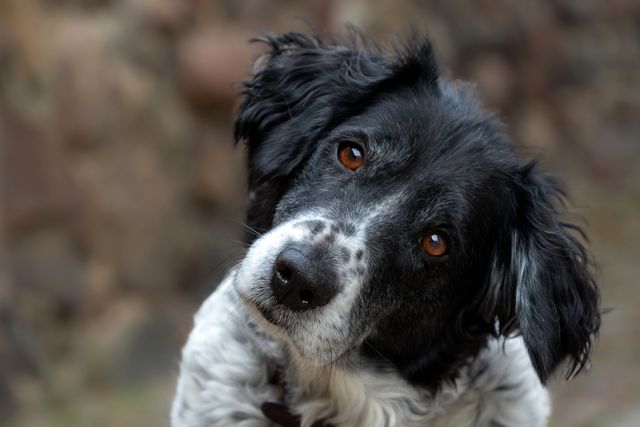
In 2015, a landmark study published in the journal Science revealed something extraordinary about the gaze between dogs and their owners. Researchers measured oxytocin levels — the bonding hormone associated with maternal attachment, romantic love, and deep social connection — in both dogs and humans after extended eye contact. The result was striking: mutual gazing triggered a significant spike in oxytocin in both species simultaneously.
This is the same neurochemical loop that bonds human mothers to their newborns. Dogs have essentially hijacked a biological system that evolution designed for parent-child attachment and extended it to their relationship with humans. When your dog stares at you — awake or asleep — they are not just watching. They are actively reinforcing a bond that their brain has categorized as family.
Cats are less studied in this specific context, but research on slow blinking — a cat's equivalent of a relaxed, trusting gaze — confirms that felines also use eye behavior as a primary tool for expressing comfort and affection with the humans they've chosen to trust.
##Science note
Dogs are the only non-human species known to spontaneously seek eye contact with humans as a primary communication strategy. Wolves — dogs' closest wild relatives — do not exhibit this behavior, suggesting it developed specifically during domestication, as dogs learned to read human faces for social cues and emotional information.
The muscle that changed everything
Here's where dog evolution gets almost poetically specific. Domestic dogs have a facial muscle that wolves do not: the levator anguli oculi medialis, a small muscle above the inner brow that pulls the eyebrow upward and inward. This is the muscle responsible for the "puppy eyes" expression — that wide, soft, slightly melancholy look that makes it virtually impossible for most humans to refuse a dog anything.
This muscle didn't exist in wolves. It evolved in domestic dogs, apparently because dogs that could produce this expression were more successful at forming attachments with humans, received better care, and passed on their genes more effectively. The stare your dog fixes on you while you sleep is delivered by eyes that evolution literally reshaped to be irresistible to you.
When staring isn't affection
Not every nocturnal stare is a love letter. Pets also fix their gaze on sleeping owners when they're hungry and hoping presence alone will trigger a feeding, when they're anxious and your stillness is the only calm thing in their environment, or — in rarer cases — when something is medically wrong. Sudden onset of persistent staring, especially in older animals, can occasionally signal neurological changes and is worth mentioning to a vet if it appears alongside other behavioral shifts like confusion or circling.
The easiest way to tell the difference: an affectionate watcher will be relaxed — body loose, posture comfortable, perhaps curled near your feet or beside your pillow. An anxious or medically distressed animal will carry tension in their body even while still. Trust your read of your own animal.
What to do about it
Mostly? Nothing. Accept the compliment. Your pet has looked at every available sleeping spot in the home, assessed every available source of warmth and safety, and chosen to spend their most alert hours watching over you. That's not a behavioral problem to solve — it's a relationship to appreciate.
If the staring disrupts your sleep, repositioning your pet's bed to the foot of yours rather than face-level usually resolves it without any loss of connection. The bond remains. The surveillance just gets redirected to your feet, which is, by any measure, a reasonable compromise.
Frequently Asked Questions
Can dogs feel guilty about bad behavior?
Research suggests dogs show appeasement behaviors instead of true guilt.
Why does my dog hide after doing something wrong?
Dogs often hide because they anticipate your reaction, not because they understand wrongdoing.
Sources
- Animal behavior observations
- veterinary guidance
- pet cognition research