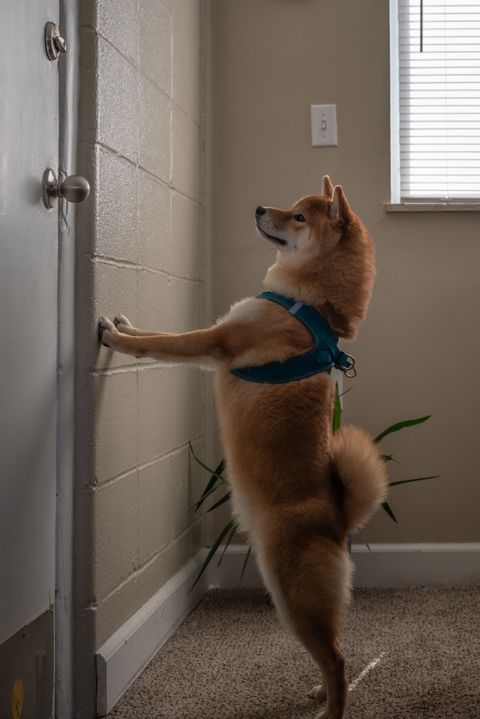
Why Dogs Tilt Their Heads When You Talk to Them
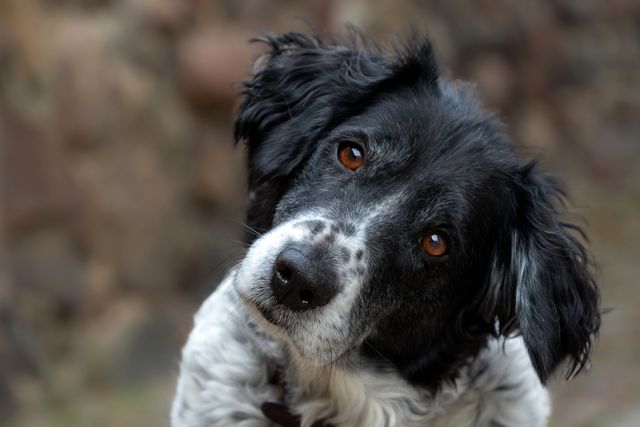
- Head-tilting likely combines better hearing
- improved vision of your face
- and real mental effort to understand familiar words. It can also occasionally signal a medical issue if it becomes constant.
You say your dog's name, or maybe a word you know they love — "walk," "treat," "dinner" — and their head cocks sharply to one side, ears perked, eyes locked on your face. It's one of the most photographed, most beloved dog behaviors there is. And for decades, nobody had actually studied why dogs do it.
The Study That Finally Looked Closely
The most rigorous investigation into head tilting came from the Family Dog Project at Eötvös Loránd University in Budapest. Researchers there were originally studying a rare group of "gifted word learner" dogs — mostly Border Collies capable of learning the names of dozens of different toys — when they noticed something odd. These exceptionally verbal dogs kept tilting their heads right before they went to fetch the toy that had been named.
- Sound localization
- Facial visibility
- Language processing
- Emotional bonding
- Novelty and startle response
A tilted head may be the closest thing dogs have to a visible thinking face.
Curious, the team formally observed 40 dogs during object-naming tests, asked to retrieve a specific toy by its name. The results were striking: the gifted word-learner dogs tilted their heads in roughly 43 percent of trials, compared to only about 2 percent for typical dogs. The finding, published in the journal Animal Cognition in 2021, suggested the tilt wasn't random — it appeared specifically when dogs heard something meaningful and were working to process it.
Fine-Tuning Their Hearing
One of the longest-standing explanations is about sound. Dogs hear a wider range of frequencies than humans do, but their ability to pinpoint exactly where a sound is coming from is less precise than ours. Tilting the head shifts the position of the ears, which can help a dog narrow down the direction and source of a noise — especially useful for picking a familiar voice or word out of background chatter.
Getting a Better Look at Your Face
There's also a vision-based theory, proposed by psychologist Dr. Stanley Coren. Dogs rely heavily on scanning human faces — particularly the mouth — for emotional and social information. But a dog's own muzzle can partially block its view of your face when looking straight on. Tilting the head shifts the muzzle out of the way and brings your mouth and expressions into clearer view. Coren's research found that dogs with shorter muzzles, like Pugs or French Bulldogs, tilt their heads less often than long-muzzled breeds — though even short-muzzled dogs still tilt more than half the time, suggesting vision is only part of the story.
A Sign of Concentration, Not Confusion
Perhaps the most compelling modern theory is that the tilt reflects active mental processing rather than simple curiosity or confusion. The Budapest researchers proposed that head-tilting may be linked to how dogs' brains handle language-like sounds, with the behavior surfacing specifically when a dog hears something it recognizes as meaningful and is trying to connect that sound to a memory or expected action.
This may also connect to brain lateralization — the tendency of one hemisphere to specialize in certain tasks. Because sensory processing crosses sides in the brain, a tilt toward one direction could reflect which hemisphere is more engaged in processing what the dog is hearing. Some researchers have described the tilt as a kind of cognitive offloading — a small physical adjustment that helps the brain settle in and process new or important information, not unlike the way a person might pause, tilt their head, or squint slightly while thinking hard.
Not Always About Language
It's worth noting that dogs don't only tilt their heads while listening to speech. Later research on canine facial expressions found dogs also tilt their heads in response to sudden, unexpected events — such as being startled by a jack-in-the-box. This raises an open question researchers are still exploring: is the tilt truly tied to language processing, or is it a broader response to anything novel or attention-grabbing? The honest answer, based on current evidence, is that it's probably both — a flexible signal of focused attention rather than a behavior reserved only for words.
Could It Also Be Social?
A few behaviorists have floated a more social explanation: that dogs learn head-tilting gets a positive reaction from their owners — more smiles, more attention, more treats — and may repeat the behavior because it works. This idea hasn't been tested as rigorously as the hearing, vision, and language theories, so it remains speculative rather than established. It's plausible dogs pick up on cues that a tilted head delights us and lean into it, the way many dogs learn to repeat any behavior that reliably gets a reaction.
When a Head Tilt Isn't Cute
While an occasional head tilt during conversation is completely normal, a sudden, persistent, or exaggerated tilt that doesn't go away can signal a medical issue rather than curiosity. Possible causes include ear infections, inner ear problems, or vestibular disease — a condition affecting balance that's more common in older dogs. Warning signs to watch for alongside a tilt include loss of balance, stumbling, rapid eye movements, or the head staying tilted constantly rather than briefly during interactions. If a tilt appears suddenly and doesn't resolve, or comes with these other symptoms, it's worth a trip to the vet rather than a reach for the camera.
What the Tilt Really Tells You
Put together, the research suggests there's no single explanation for why dogs tilt their heads — it's likely a combination of better hearing, clearer vision of your face, and genuine mental effort to connect what they're hearing to something they know. For owners of especially attentive or word-savvy dogs, a head tilt may be one of the clearest outward signs that your dog isn't just hearing you — they're actively trying to understand you.
So the next time your dog cocks their head at the sound of your voice, you're not just witnessing something cute. You're watching a small, visible flicker of a dog's mind at work — ears adjusting, eyes searching your face, and brain reaching for a word it knows matters.
Frequently Asked Questions
Why does my dog tilt its head at certain words?
Dogs often tilt their heads at words they recognize as meaningful, such as their name or favorite phrases, possibly to help process and understand the sound. ;
Should I worry if my dog's head tilt won't go away?
persistent or sudden head tilt that doesn't resolve, especially with balance problems, can indicate an ear or vestibular issue and should be checked by a vet.
Sources
- Animal Cognition (2021
- Family Dog Project
- Eötvös Loránd University)
- Dr. Stanley Coren research
- veterinary behaviorist commentary